


.png)


Many wild mushrooms look similar. Some are harmless. Some are psychoactive. Some contain toxins that can lead to liver or kidney failure, or death.4 Learning how to safely identify magic mushrooms in the wild requires caution, multi-trait verification, and an understanding that the risk of misidentification remains high, even for skilled foragers. If you’re new to the topic, you can read more about what magic mushrooms are before considering foraging.
Why Accurate Identification Is Crucial
Misidentification is a major driver of severe mushroom poisoning worldwide, and several of the most dangerous species share overlapping visual traits with psilocybin mushrooms.1 Amanita species, Galerina marginata group, and Cortinarius species are among the most serious toxic lookalikes.
Amatoxin-containing mushrooms (including Amanita phalloides) can produce delayed poisoning, where symptoms may only begin 6–24 hours after ingestion.4 5 This delay often creates a false sense of reassurance, and by the time medical care is sought, damage can already be serious.
Even experienced foragers sometimes get it wrong. Moisture, sunlight, substrate type, age, and weather exposure can all alter a mushroom’s appearance, sometimes dramatically. This is why psilocybin mushroom identification must be based on multiple converging traits rather than intuition, colour alone, or a single visual trait. This is in addition to the risks and side effects of psilocybin itself, which exist even with correctly identified mushrooms.
What Are the Main Physical Features to Look for When Identifying Magic Mushrooms in the Wild?
General traits often referenced in psilocybin-containing species include:
- Purplish-black to dark purple-brown spore print colour6
- Fibrous stems
- Gills that darken toward maturity as spores develop
- Blue staining/bruising in many (but not all) Psilocybe species1 is supportive as a clue, but never a standalone confirmation
Is there an easy test to confirm psilocybin?
No home test can reliably distinguish psilocybin-containing mushrooms from poisonous species. Blue bruising is frequently discussed as a field indicator, but it is not definitive; several non-psilocybin boletes can also bruise blue due to entirely different chemical pathways.8 Bruising can be supportive as part of a wider pattern, but it should never be considered a confirmation on its own.
Key Identification Traits & Methods
When people talk about “spotting” magic mushrooms in the wild, they’re usually talking about a combination of physical traits, habitat clues, and cross-checking features. No single trait proves anything on its own, but understanding each category helps you build a safer, multi-layered picture.
Macroscopic Traits (Cap, Stem, Gills, Spore Print)
These are the visual surface-level features that can be seen without magnification. Becoming familiar with them can aid in accurate identification when combined with other characteristics.
Cap shape
Many Psilocybe species have conical, bell-shaped, or a noticeable “nippled” papilla on the top (Psilocybe semilanceata is the classic reference point for this in Europe).
Cap colour
Colours range from caramel to tan, chestnut, or yellow-brown, but can shift dramatically depending on hydration. A cap that looks pale and straw-like when dry may look dark caramel after rain.
Gills
Gills tend to be close together and will darken as spores mature. Early-stage vs late-stage colour differences are a common reason beginners misjudge identity; this can change even across a single day.
Stem
Often thin, fibrous, and sometimes hollow or semi-hollow. Some may have veils. Some won’t. This is species-specific, so stem structure is only one supportive layer, never a standalone identifier.
Bruising / Staining
Blue bruising is common in many psilocybin mushrooms, but again, never rely on this alone.2 8 It’s supportive patterning, not confirmation. Environment, handling pressure, time, and species all influence how the staining is expressed.
Spore print
Spore prints are extremely useful. Purple-brown to near-black is typical for many Psilocybe species.6 To take one:
1. Remove cap
2. Place cap, gills down, on foil or white card
3. Cover with a container or a glass
4. Leave sealed overnight
This is one of the more dependable traits in the total picture, especially combined with habitat and morphology.
Habitat, Season & Growth Pattern
Where a mushroom grows, and the time of year you find it, is often just as informative as macro traits. Experienced foragers essentially treat habitat and season like a second filter layer. This alone rules out many dangerous lookalikes before you even start examining fine detail.
Typical habitats
Different Psilocybe species favour very different environments.
Some thrive in grasslands and unimproved pasture (Psilocybe semilanceata), while others prefer mulched woodchip beds, garden landscaping, or human-altered substrates (Psilocybe cyanescens).6 This substrate detail is one of the most overlooked yet crucial beginner checkpoints.
Seasonality
Across most of Europe, wild psilocybin mushrooms are most commonly associated with autumn, particularly after sustained periods of rainfall.6 There are exceptions, but this seasonal rhythm is a strong and very practical filtering factor.
Growth formations
Psilocybe species are often observed growing singly or lightly scattered across a field or patch, not in tight, dense clusters on wood (a growth pattern far more typical of some dangerous Galerina species). Paying attention to how mushrooms appear in context, rather than just their individual morphology, is one of the simplest harm-reduction checks a person can make.
5 Species Examples & Comparisons
Below are some psilocybin species commonly referenced or encountered in Europe. They can help illustrate the range of what “magic mushrooms” can look like, rather than implying one standard shape or colour. Real-world specimens still vary hugely depending on weather, age, moisture and substrate, so this is a starting reference point rather than a confirmation tool.
Liberty Cap (Psilocybe semilanceata)
One of the most widespread psilocybin mushrooms in Europe.6 Recognisable by a conical cap with a distinct papilla (“nipple”). Caps often appear caramel-brown when wet and pale beige when dried. Typically associated with unimproved grasslands and pasture, especially through the cooler, wetter months.
Wavy Cap (Psilocybe cyanescens)
Known for wavy, undulating cap margins at maturity. Frequently found in mulched woodchip beds, garden landscaping, and urban green spaces. Strong blue bruising is common, but several deadly wood-loving species can appear extremely similar at a glance, making detailed verification crucial.7
Psilocybe allenii
Often observed in similar woody landscaping habitats to P. cyanescens. Caps can range from a rust-brown to a chestnut colour when hydrated. Although most common in North America, it occasionally appears in Europe through the importation of mulch. Must still be cross-referenced carefully due to overlap with toxic species that share the same substrate.
Ovoid (Psilocybe ovoideocystidiata)
Linked with riparian zones, creek beds, riverbanks, floodplains, and mixed hardwood waste. Cap colours vary from pale brown to yellowish. May bruise blue in areas where the stem or gills are pressed, but again, bruising is only supportive, not diagnostic.
Other Psilocybe species
There are dozens of psilocybin-containing species across Europe and globally. Identification must never rest on cap colour alone or one “signature.” Regional variation, age, substrate, and moisture make one-trait rules unreliable.
Toxic Lookalikes to Watch Out For
Some of the most dangerous mistakes happen because a mushroom looks “close enough” to a psilocybin species at a glance, especially once water content, age, and lighting distort colour. The following genera contain species that can cause life-threatening poisoning, and these are just three examples. The core harm-reduction principle here: many deadly mushrooms overlap visually with psilocybin species at multiple stages of growth.
Amanita spp (can be deadly)
Species such as Amanita phalloides (death cap) and Amanita virosa (destroying angel) contain amatoxins, which are toxic to liver cells.4 Symptoms can be delayed 6–24 hours, and cooking does not neutralise the toxin.
Galerina marginata group (liver toxins, extremely dangerous)
Often mistaken for a small brown psilocybin species on wood. Contains amatoxins similar to death caps.4 A single incorrect ID can be catastrophic.
Cortinarius spp (renal toxicity risk)
Cortinarius species can contain orellanine, which can damage the kidneys and may have a delayed symptom onset.5 Traits vary dramatically with age, making visual certainty extremely difficult even for experts.
Risk Mitigation & Safe Practices
Identifying wild mushrooms is not a visual guessing game. Harm reduction here means slowing down, cross-checking, and assuming you may be wrong before you assume you are right. Keep these tips in mind:
- Never rely on one trait alone
- Always cross-reference multiple traits and trusted external sources
- Document specimens carefully (including underside of cap, stipe close-ups, habitat photos, and spore print)
- Compare observations with reputable mycology references rather than social media pattern matching
- Avoid assuming European species are “easy” or predictable; regional variability is significant
- If something goes wrong, keep remaining samples for medical identification (it can meaningfully affect treatment pathways)
Beyond identification, you can also learn how to prepare for a psychedelic trip in ways that consider mindset, environment, and support.
When and Why It’s Better Not to Attempt Foraging
Most severe poisoning cases happen because someone anchors on one feature (cap colour, bruising, a photo memory, folklore). Single-trait identification is the most common mistake made by beginners.
Legal consequences vary across Europe; in many countries, psilocybin mushrooms are controlled substances, making possession illegal.3
Some people choose to skip foraging entirely due to the statistical risk mismatch: low accuracy for novices vs extremely high potential harm outcome.
Better Alternatives to Foraging
Safer routes to learn about psilocybin mushrooms include studying taxonomy, microscopy, and known specimen images. Learning through controlled, non-wild contexts reduces the risk of misidentification while still developing genuine mycology skills. Separate guidance also covers how to take magic mushrooms safely for those who decide to use them outside of a foraging context.
Harvesting edible mushrooms is a safer entry point into the world of mushroom cultivation. It’s low-risk, educational, and skill-transferable. For cultivators, there is dedicated advice on how to harvest magic mushrooms in controlled environments.
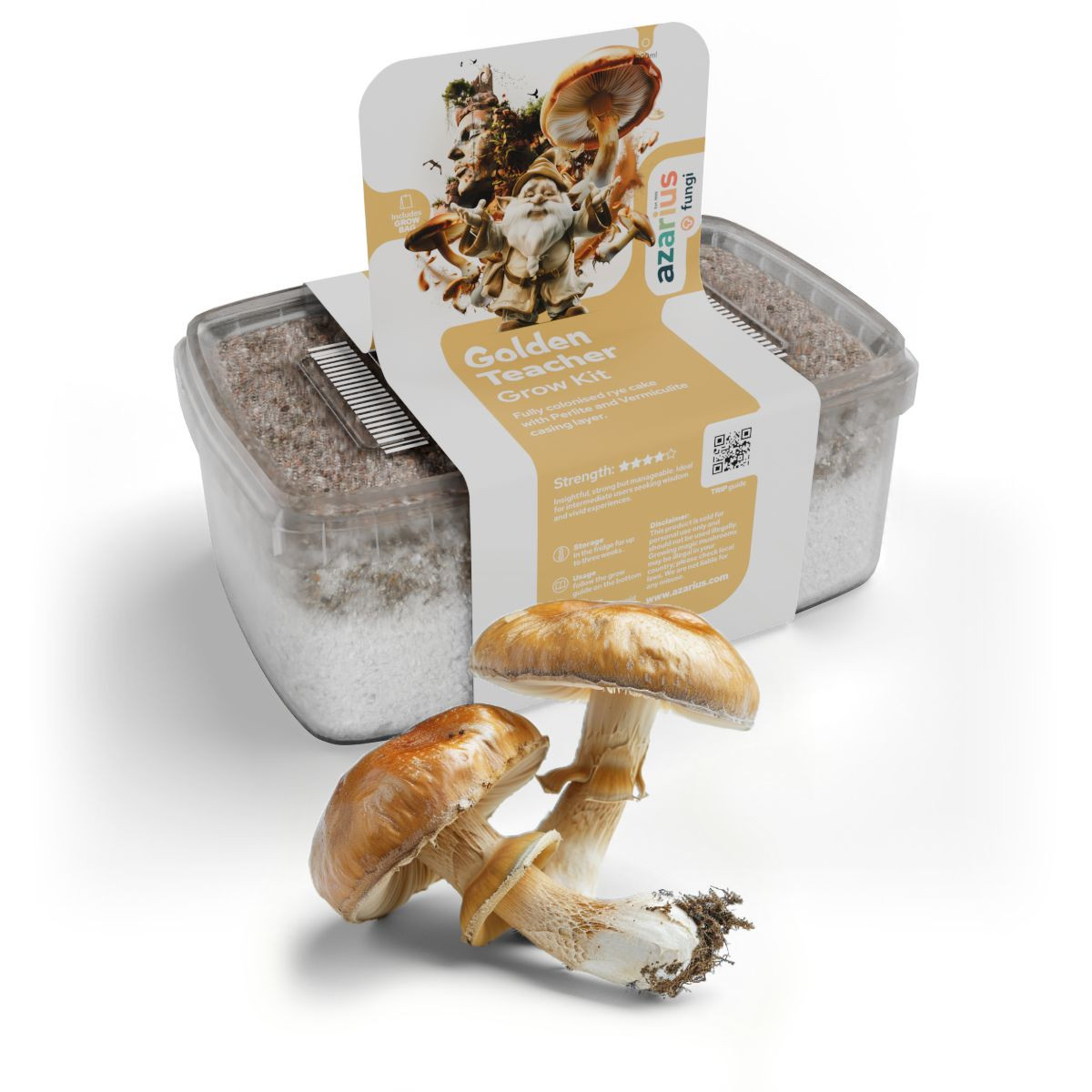
Golden Teacher
Magic Mushroom Grow KitsThink Before You Forage for Magic Mushrooms
Identifying magic mushrooms in the wild requires knowledge, nuance, and an understanding of fungal diversity. Psilocybin mushrooms share overlapping visual traits with multiple toxic species, meaning risk management is the core harm reduction principle.
If someone chooses to study wild mushrooms, the priority should always be thorough verification, multiple trait confirmation, and erring on the side of caution rather than assumption.
References
- Hallucinogenic mushrooms drug profile | www.euda.europa.eu. www.euda.europa.eu. https://www.euda.europa.eu/publications/drug-profiles/hallucinogenic-mushrooms_en↩︎
- Goggins P. The Misuse of Drugs (Designation) (Amendment) Order 2005 - Explanatory Memorandum. Legislation.gov.uk. Published 2025. Accessed November 10, 2025. https://www.legislation.gov.uk/uksi/2005/1652/memorandum/contents↩︎
- Vo KT, Montgomery ME, Mitchell ST, et al. Amanita phalloides Mushroom Poisonings — Northern California, December 2016. MMWR Morbidity and Mortality Weekly Report. 2017;66(21):549-553. doi:https://doi.org/10.15585/mmwr.mm6621a1↩︎
- Psilocybe semilanceata, Magic Mushroom, Liberty Cap. First-nature.com. Published 2016. https://www.first-nature.com/fungi/psilocybe-semilanceata.php↩︎
- NHS Choices. Overview - Poisoning. NHS. Published 2019. https://www.nhs.uk/conditions/poisoning/↩︎
- Psilocybe cyanescens, Bklueleg Brownie. First-nature.com. Published 2016. Accessed November 10, 2025. https://www.first-nature.com/fungi/psilocybe-cyanescens.php↩︎
- Lenz C, Wick J, et al. Injury-Triggered Blueing Reactions of Psilocybe “Magic” Mushrooms. Angewandte Chemie Int Ed. 2020;59(4):1450–1454. https://www.leibniz-hki.de/en/press/injury-triggered-bluing-reactions-of-psilocybe-magic-mushrooms-deciphered.html↩︎
- Services D of H & H. Mushroom poisoning. www.betterhealth.vic.gov.au. https://www.betterhealth.vic.gov.au/health/healthyliving/mushroom-poisoning↩︎