


.png)


Functional mushrooms have quietly and confidently slipped into modern wellness culture. No longer reserved for herbalists or seasoned supplement enthusiasts, they now appear in morning coffees, evening teas, pocket-sized tincture bottles, smoothie powders, and cheerful gummies. Their rise isn’t really surprising.
Many readers exploring functional mushroom consumption methods seek clarity on the best way to incorporate functional mushrooms into their daily lives. Part of the fascination comes from what these fungi contain. Compounds such as β-glucans, terpenoids, and phenolics may support immune modulation, antioxidant activity, or cognitive pathways.1
Before we explore each format, let’s begin with a crucial foundational point.
Why Are People Consuming Functional Mushrooms?
Ask a handful of people why they began using mushrooms, and you’ll get a spectrum of answers: a desire for clearer focus, steadier energy, calmer evenings, or simply curiosity about trying something rooted in tradition. Beneath all of these motivations sits a simple truth: people want tools that fit into their lives without adding friction.
β-glucans, for instance, have gained attention because early studies suggest they may influence immune responses and antioxidant pathways. Terpenoids, present in species such as reishi, are being explored for their roles in stress resilience. And lion’s mane contains compounds such as hericenones and erinacines, which researchers continue to study in relation to cognitive pathways.
Do Adaptogenic Mushroom Supplements Work as Well as Eating the Mushrooms?
There’s a comforting pleasure in eating mushrooms as food; the earthy flavour of shiitake in a stir fry or the soft richness of button mushrooms in a sauce. Yet when it comes to functional mushrooms, culinary uses and concentrated supplements play very different roles.
Culinary mushrooms are nutritious in their own right, providing fibre, minerals, and antioxidants. However, properly extracted supplements may deliver higher concentrations of certain compounds than typical dishes.2
Hot-water extraction, dual extraction, and alcohol-assisted extraction can extract polysaccharides, terpenes, and other bioactive components that may not be readily accessible in cooked whole mushrooms.3 4
This doesn’t mean supplements “work better,” but rather that they serve a different purpose. A bowl of mushroom soup nourishes you; an extract aims to provide a concentrated dose of specific compounds. The best choice depends on what you’re looking for and how you want to use mushrooms in your daily life.
Most Popular Ways to Consume Functional Mushrooms
Mushroom formats have grown far beyond the classic capsule. Today, there’s a version to suit almost every personality and routine. Some people enjoy the earthy presence of powders in their morning coffee, while others prefer the quiet simplicity of capsules or the immediacy of tinctures.
To help you navigate these options, let’s walk through each one in a warm, grounded way, imagining how they might feel in practice, how they fit into real mornings and real evenings, and where they may or may not be comfortable in your routine.
Powdered Mushrooms: A Gentle Way to Blend Mushrooms Into Daily Rituals
Powders attract people who enjoy the sensory aspects of wellness, including stirring, blending, frothing, and tasting. Discover their pros and cons below.
Benefits
- Adding a spoonful of lion’s mane to a smoothie or whisking reishi into warm milk can become a small grounding ritual.
- Powders offer flexibility; you can adjust the amount gradually, combine species, or weave them into recipes without changing your whole routine.
Downsides
- Their greatest challenge is flavour. Chaga has an earthy, almost woody depth; reishi leans towards a bitter taste; lion’s mane offers a subtle savouriness.
- Some people appreciate these notes, while others gently mask them with cacao, coffee, or fruit.
- Onset tends to feel gradual, especially when taken with food.
- Powders travel reasonably well, but they require containers and spoons, making them better suited to home use than on-the-go moments.
Capsules and Tablets: Simplicity Wrapped in a Familiar Format
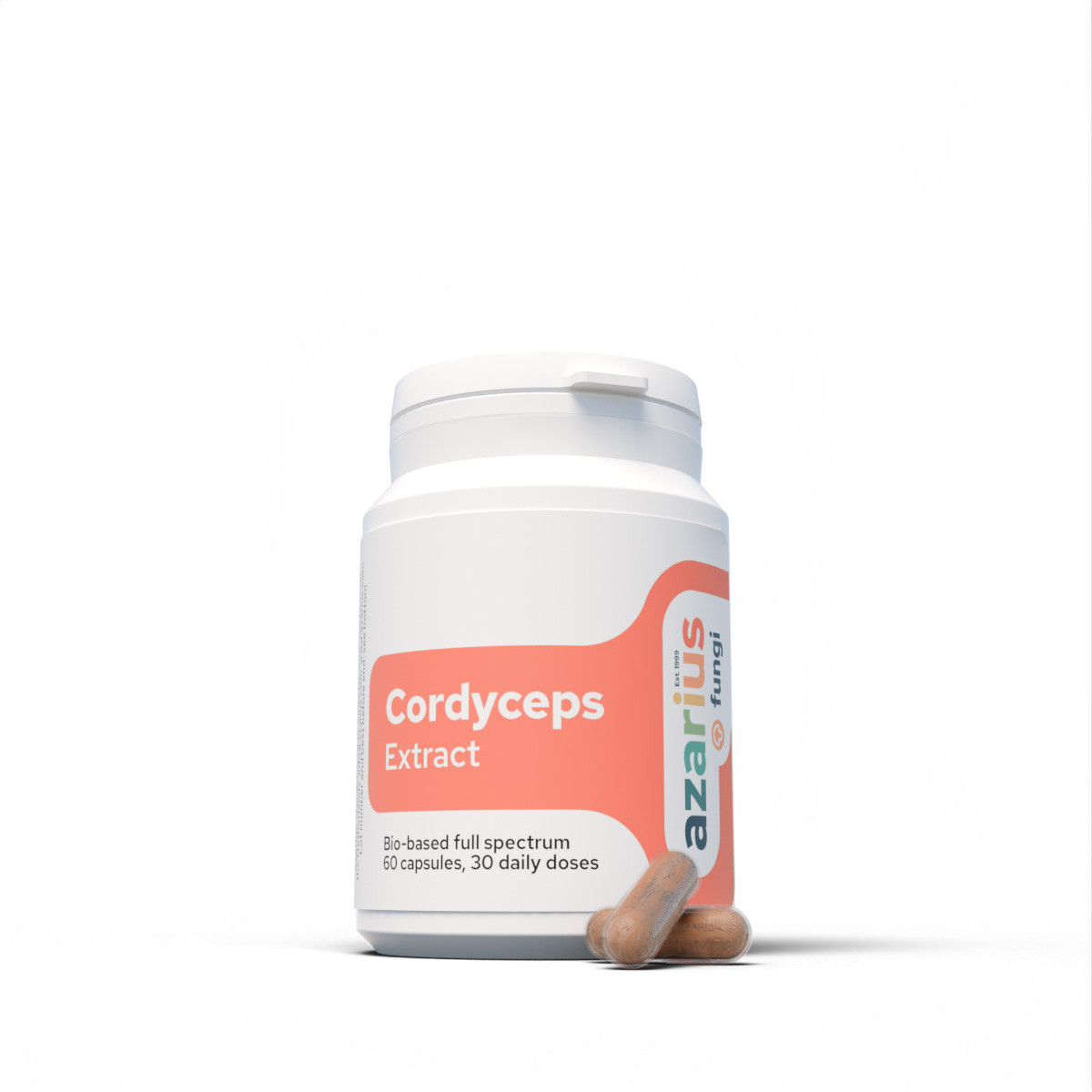
When comparing functional mushroom capsules vs powder, capsules appeal to people who prefer convenience and consistency. Capsules ask very little of you; no measuring, no flavour to negotiate, no extra steps beyond a sip of water. If you appreciate structure, capsules tend to slip seamlessly into existing routines.
Benefits
- Capsules feel reassuring because they resemble other supplements in the cupboard.
- Capsules tend to slip seamlessly into existing routines.
- Travelling with capsules is easy, and they avoid the sensory challenges that powders sometimes bring.
Downsides
- Because the capsule must break down in the gut, the onset may feel slower than tinctures or liquids.
- The trade-off is consistency: the same amount every time, neatly contained.
- It’s important to check labels for extraction details, allergen information, and verified β-glucan content.
Mushroom Teas and Coffees: The Pleasure of a Slow Sip
Functional mushrooms in coffee or tea have become a popular and approachable format. Warm drinks allow mushrooms to blend with the rhythm of your day, creating subtle transitions: waking up, unwinding, and pausing between tasks.
Benefits
- There’s something comforting about sipping mushrooms.
- Reishi tea, with its quiet bitterness, has long been used in evening rituals.
- Chaga decoctions, simmered slowly, have been enjoyed in various traditions.
- Modern mushroom coffees, often paired with lion’s mane or cordyceps, offer a softer take on morning stimulation for those reducing caffeine.
- Warm drinks allow mushrooms to create small transitions throughout the day.
Downsides
- Brewing raw pieces takes time.
- Flavoured blends vary in potency.
- Some compounds may degrade if exposed to prolonged heat.
- Chaga contains naturally occurring oxalates, something to be aware of if you are sensitive.
Tinctures and Extracts: Concentrated Drops for Quick and Easy Use
If you’re wondering about functional mushroom tincture and how to use it, tinctures are typically taken sublingually or added to drinks. Tinctures appeal to individuals who seek a quick, portable, and low-effort experience.
Benefits
- A few drops under the tongue before work, or mixed discreetly into tea, can feel effortless.
- Dual-extracted tinctures may draw out a wider range of compounds.
- Alcohol-free glycerites cater to those avoiding alcohol.
Downsides
- The taste can be intense, especially with reishi.
- Because liquids absorb more quickly than powders, some people perceive tinctures as having a faster onset, though responses vary widely.
Gummies & Edibles: A Friendly Entry Point for the Mushroom-Curious
Functional mushroom gummies often serve as the gentlest introduction.
Benefits
- They feel familiar, small, slightly playful, and easy to take without effort.
- Their sweetness masks flavours entirely, which is helpful for beginners.
Downsides
- The sweetness comes with added sugars.
- Gummies tend to contain smaller amounts of extract per piece.
- Some gummies use fruiting-body extracts, others use powders, and potency differs.
- Gummies offer a comfortable starting point but may not suit people seeking high concentrations.
How to Choose the Right Format for You
Selecting the right mushroom format isn’t about hunting for the “best” one; it’s about noticing how you move through your day. Some formats are easily integrated into morning rituals, while others suit travel, busy schedules, or gentle bedtime routines.
To help you visualise how each format behaves in real life, the following table consolidates all these qualities in a single, easy-to-compare overview.
| Format | Pros | Cons | Best For | Onset (perceived)* | Dose Control | Portability | Taste Mask |
|---|---|---|---|---|---|---|---|
| Powders | Flexible; cost-effective | Distinct flavours; needs measuring | People who enjoy blending into food/drink | Gradual | High | Medium | Low |
| Capsules | Familiar; no taste | Less customisable | Structured supplement routines | Slow–moderate | Medium | High | High |
| Teas/Coffees | Ritualistic; aromatic | Variable potency; prep time | Slow sippers, evening unwinders | Gradual | Low | Medium | Medium |
| Tinctures | Concentrated; portable | Strong taste; higher cost | Quick, discreet dosing | Often feels faster | Medium–High | High | Low |
| Gummies | Tasty; very approachable | Added sugars; lower potency | Beginners and flavour-averse users | Slow–moderate | Low | Very High | High |
How Often Should You Consume Functional Mushrooms?
For those asking, "Are functional mushrooms safe to consume?" The answer depends on the species, extraction method, dose, and individual health context. The rhythm of mushroom use is personal. Some people take them daily because the routine itself feels supportive; others use them selectively, weaving lion’s mane into workdays or choosing reishi on evenings when they want to unwind.
Many products are marketed for daily use; however, safety depends on the specific mushroom, dose, extraction method, and individual context.5 6
Cycling, taking breaks on weekends or between months, is a practice some people follow, though it hasn’t been extensively studied. Interactions may occur, particularly with medications that affect blood clotting, immune function, or blood sugar levels, so clinical guidance is essential if any of these conditions apply.
Most importantly, the experience tends to build over time. Mushrooms are not stimulants; their effects, if felt, are usually subtle and cumulative.
Choosing the Best Way to Take Functional Mushrooms for You
There is no single right way to take functional mushrooms. The most helpful format is the one that feels natural, enjoyable, and sustainable for you. Powders weave into food rituals; capsules slip neatly into structured mornings; teas and coffees bring warmth and presence; tinctures offer quick, concentrated simplicity; and gummies create a friendly entry point for the mushroom-curious.
If you’re unsure where to begin, try one format for a few weeks and simply notice. Your body will tell you more than a label ever could. If you'd like to explore further, you may enjoy our in-depth guide to lion’s mane, which delves into traditional use and extraction, or our gentle overview of reishi, often associated with evening calm. When you’re ready to experiment, choose a format that feels like it belongs in your life, not one that disrupts it.
References
- Vlassopoulou M, Yannakoulia M, Pletsa V, Zervakis G, Kyriacou A. Effects of Fungal Beta-Glucan on Health - A Systematic Review of Randomized Controlled Trials. Food & Function. Published online 2021. doi:https://doi.org/10.1039/d1fo00122a ↩︎
- Leong YK, Yang FC, Chang JS. Extraction of polysaccharides from edible mushrooms: Emerging technologies and recent advances. Carbohydrate Polymers. 2021;251:117006. doi:https://doi.org/10.1016/j.carbpol.2020.117006 ↩︎
- Qiu Y, Lin G, Liu W, et al. Bioactive substances in Hericium erinaceus and their biological properties: a review. Food Science and Human Wellness. 2024;13(4):1825-1844. doi:https://doi.org/10.26599/FSHW.2022.9250152 ↩︎
- Kozarski M, Klaus A, van Griensven L, et al. Mushroom β-glucan and polyphenol formulations as natural immunity boosters and balancers: nature of the application. Food Science and Human Wellness. 2023;12(2):378-396. doi:https://doi.org/10.1016/j.fshw.2022.07.040 ↩︎
- National Center for Complementary and Integrative Health. Using Dietary Supplements Wisely. NCCIH. Published January 2019. https://www.nccih.nih.gov/health/using-dietary-supplements-wisely ↩︎
- National Center for Complementary and Integrative Health. Herb-Drug Interactions. NCCIH. Published July 2021. https://www.nccih.nih.gov/health/providers/digest/herb-drug-interactions ↩︎