


.png)


What Are Magic Mushrooms and How Do They Work?
If you’ve heard people talk about magic mushrooms but aren’t entirely sure what they are or how they affect the mind and body, you’re in the right place. Magic mushrooms contain naturally occurring psychoactive tryptamines, mainly psilocybin and psilocin.
Most experiences last around 4–6 hours, sometimes followed by a gentle “afterglow” the next morning. And although there is growing interest in clinical research, psilocybin remains illegal in many parts of the world.
What Are Magic Mushrooms?
The term “magic mushrooms” refers to a large group of fungi that contain psychoactive compounds, mainly psilocybin and psilocin.1 These mushrooms naturally grow in humid forests, temperate grasslands, and subtropical regions across the globe. Historical and anthropological records show that certain cultures in Central and South America used psilocybin mushrooms ceremonially for centuries.8
A few well-known species include Psilocybe cubensis (commonly cultivated), Psilocybe semilanceata (liberty caps), Psilocybe cyanescens (wavy caps), and Psilocybe azurescens, which is known for its higher potency. Potency can vary not only between species, but also between batches of the same species, something that often catches people by surprise.
To keep terms clear as you read, here are a few definitions:
- Psilocybin: A prodrug that the body converts into psilocin
- Psilocin: The active compound that interacts with serotonin receptors
- 5-HT₂A receptor: A serotonin receptor central to psychedelic effects
- Default Mode Network: A brain network involved in narrative thought and self-reflection
What Do Magic Mushrooms Look Like?
Appearance varies widely across species, but many psilocybin-containing mushrooms share certain familiar traits. Caps often range from caramel to golden brown, with pale slender stems and gilled undersides. Some species exhibit blue bruising when handled, a result of psilocin oxidation.10 They tend to be small to medium in size.
It’s important to emphasise that blue bruising is not a reliable safety indicator. Many poisonous mushrooms mimic the appearance of psychedelic species, and misidentification can be extremely dangerous. This article is not meant as a foraging guide. Never collect mushrooms without expert verification. If you do forage, consult a detailed guide on identifying magic mushrooms in the wild.
What Makes Magic Mushrooms Different From Regular Mushrooms?
Most culinary or adaptogenic mushrooms don’t contain significant amounts of psilocybin or psilocin. Magic mushrooms do, with psilocybin being the key compound that the body converts into psilocin once ingested. Psilocin binds to serotonin receptors and is responsible for the temporary changes in perception, mood, and cognition often associated with psychedelic experiences.2
How Do Magic Mushrooms Work in the Brain?
Psilocybin mushrooms alter how different brain networks communicate with one another.
After ingestion, psilocybin is converted into psilocin.3 Psilocin partially activates 5-HT2A receptors in certain cortical areas, which influences how we process sensory input and emotional signals.
Brain imaging studies show that this receptor activity corresponds with reduced coherence in the Default Mode Network and increased cross-talk between networks that usually operate more independently.4
Some early research suggests psilocybin may also trigger signals associated with neuroplasticity, the brain’s ability to create or reorganise connections.3 Taken together, these effects offer a scientific explanation for why some people experience temporary loosening of rigid emotional or cognitive patterns.
What Do Magic Mushrooms Feel Like?
The effects vary from person to person, but many people describe a shift in their perception of themselves and the world around them. Emotions may feel more intense. Symbolic or abstract thinking can appear. Some people feel unusually connected or introspective.
On a sensory level, colours may appear richer, sounds may seem layered or textured, and visual patterns or distortions may become more pronounced. Body sensations can also change—people often describe feeling lighter, heavier, or simply “different.”
After ingestion, effects typically begin within 20–60 minutes, peak around 1.5–3 hours, and gradually fade over the next few hours. It’s not uncommon to feel reflective, open, or slightly tender the next day.
Challenging experiences are also possible, especially when there is insufficient preparation, unsuitable environments, or unexpectedly strong doses. Reading about how to prevent a bad psychedelic trip can help you plan more safely.
Are Magic Mushrooms Being Used for Medical or Therapeutic Purposes?
Psilocybin is not an approved treatment, but it is being studied in controlled clinical settings. Research teams have investigated its potential for major depressive disorder, treatment-resistant depression, and alcohol use disorder, with structured therapy and professional oversight built into the process.5 6 7
These studies investigate whether psilocybin can enhance emotional processing when combined with preparation and integration, rather than examining the safety of casual use. Other research areas include anxiety related to serious illness, though this remains a developing field.
How Do People Usually Consume Magic Mushrooms?
People most commonly use dried or fresh mushrooms, teas, capsules, chocolates, or other edible preparations.10 Some methods are easier to measure than others; capsules and dried mushrooms tend to offer more consistent dosing than homemade chocolates or infusions. For practical tips, see our guide on how to take magic mushrooms.
Harm-reduction groups strongly caution against using unidentified powders or mixtures, as adulteration and dose variability can pose significant health risks.
Dried Versus Fresh Mushrooms
Fresh mushrooms are mostly water, about 90%, so they often weigh around ten times more than dried mushrooms for the same approximate psilocybin content. Dried mushrooms store more easily and are simpler to weigh, but potency still varies. Individual sensitivity and health history matter just as much as the amount consumed.
What Should You Know Before Trying Magic Mushrooms for the First Time?
This isn’t a recommendation to use them, but if someone is considering it, harm-reduction approaches emphasise a few essential principles.
A stable mindset helps reduce anxiety and emotional spirals. A calm, predictable setting, ideally indoors, makes the environment feel safer. Many people choose to have a sober, grounded sitter nearby to provide reassurance and address practical needs. Health history is important too; people with personal or family histories of psychosis or certain cardiac conditions are often screened out of clinical studies because of elevated risk.
Another key message: avoid mixing psychedelics with alcohol, stimulants, or other psychoactive substances. Clinical studies typically include a rest day afterwards to allow for integration and recovery.
Legal Status of Magic Mushrooms
Legality varies across regions and is subject to change over time. As of November 2025, psilocybin and psilocin are Class A drugs in the UK, meaning possession and supply carry severe penalties. Across the EU, psilocybin mushrooms are generally controlled substances, though specifics differ between member states.9 In the Netherlands, psilocybin-containing truffles (sclerotia) may be sold legally, while dried mushrooms remain illegal.11
In the United States, federal law still classifies psilocybin as Schedule I, though some states and cities have moved toward decriminalisation. Elsewhere in the world, laws range from strict prohibition to regulated medical trials.
Magic Mushrooms: A Balanced Perspective
Magic mushrooms occupy a unique intersection between ancient cultural use and modern scientific exploration. They can create profound psychological shifts and have shown promise in structured clinical research, but they also carry legal, psychological, and practical risks, especially without preparation or support.
Learning how they work and what to expect helps you make informed, careful decisions. If you’re exploring further, it may help to read guides on preparation, such as how to prepare for a psychedelic trip, harm reduction, set and setting, and integration. Approached thoughtfully, the conversation around psychedelics becomes clearer, safer, and far more grounded.
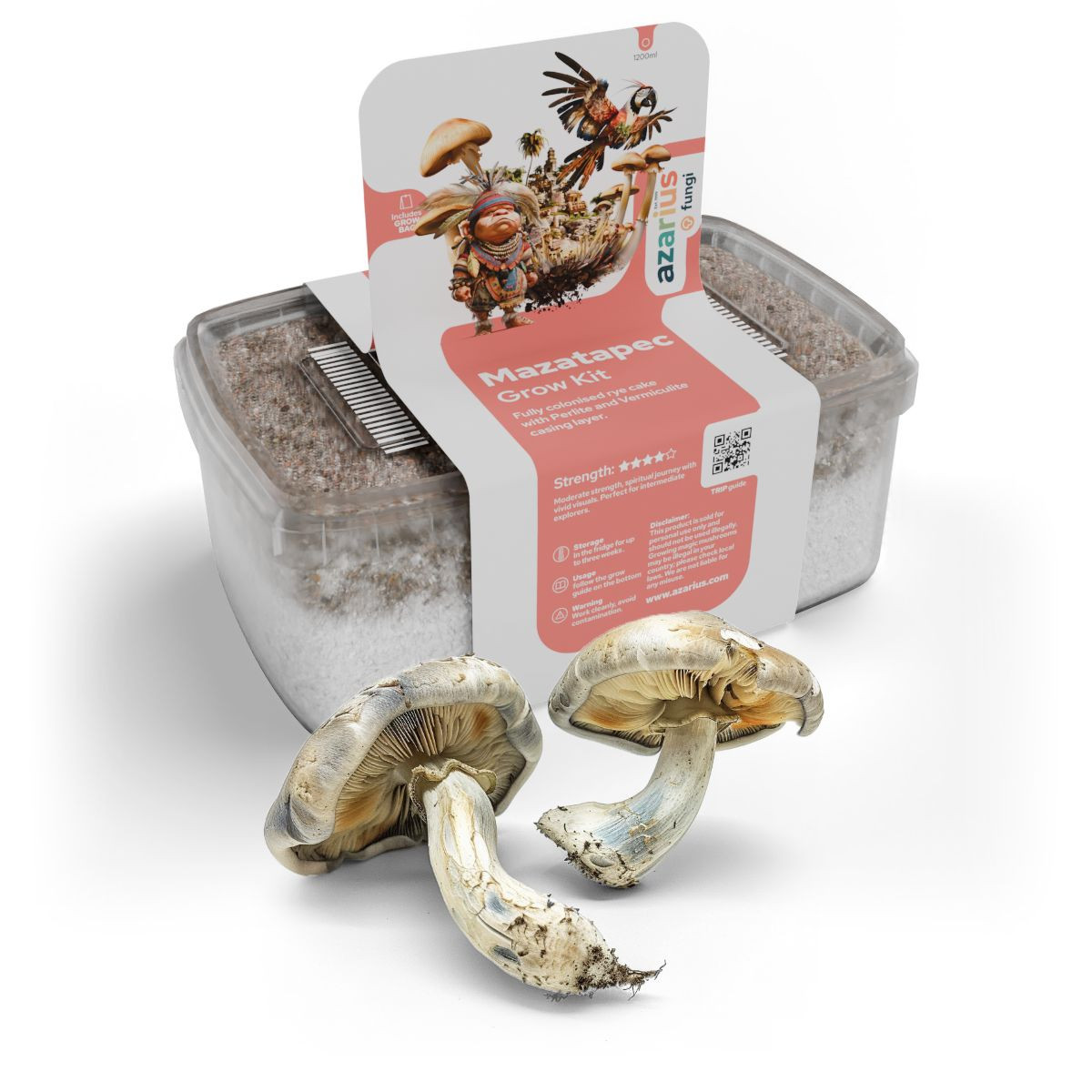
Mazatapec
Magic Mushroom Grow KitsReferences
- Smausz R, Neill J, Gigg J. Neural mechanisms underlying psilocybin’s therapeutic potential – the need for preclinical in vivo electrophysiology. Journal of Psychopharmacology. 2022;36(7):781-793. doi:https://doi.org/10.1177/02698811221092508. ↩︎
- Grandjean J, Buehlmann D, Buerge M, et al. Psilocybin exerts distinct effects on resting state networks associated with serotonin and dopamine in mice. NeuroImage. 2021;225:117456. doi:https://doi.org/10.1016/j.neuroimage.2020.117456. ↩︎
- Calder AE, Hasler G. Towards an understanding of psychedelic-induced neuroplasticity. Neuropsychopharmacology. 2022;48(48):1-9. doi:https://doi.org/10.1038/s41386-022-01389-z. ↩︎
- Lsd I. HALLUCINOGENS and DISSOCIATIVE DRUGS Research Report Series.; 2014. https://nida.nih.gov/sites/default/files/hallucinogensrrs.pdf. ↩︎
- Carhart-Harris R, Giribaldi B, Watts R, et al. Trial of Psilocybin versus Escitalopram for Depression. New England Journal of Medicine. 2021;384(15):1402-1411. doi:https://doi.org/10.1056/nejmoa2032994. ↩︎
- Davis AK, Barrett FS, May DG, et al. Effects of Psilocybin-Assisted Therapy on Major Depressive Disorder. JAMA Psychiatry. 2020;78(5):481-489. doi:https://doi.org/10.1001/jamapsychiatry.2020.3285. ↩︎
- Bogenschutz MP, Ross S, Bhatt S, et al. Percentage of heavy drinking days following psilocybin-assisted psychotherapy vs placebo in the treatment of adult patients with alcohol use disorder. JAMA Psychiatry. 2022;79(10):953-962. doi:https://doi.org/10.1001/jamapsychiatry.2022.2096. ↩︎
- Hallucinogenic mushrooms drug profile | www.euda.europa.eu. www.euda.europa.eu. https://www.euda.europa.eu/publications/drug-profiles/hallucinogenic-mushrooms_en. ↩︎
- EUDA. European Drug Report 2024: Trends and Developments | www.euda.europa.eu. Europa.eu. Published 2024. https://www.euda.europa.eu/publications/european-drug-report/2024_en. ↩︎
- Psilocybin. Drug Science. https://www.drugscience.org.uk/psilocybin. ↩︎
- Home Office. Controlled Drugs List. GOV.UK. Published May 26, 2016. https://www.gov.uk/government/publications/controlled-drugs-list--2. ↩︎
Related posts
Magic Mushrooms: Dosage Guide and How to Take Them
Magic mushrooms can be consumed in several ways, and the method you choose affects the onset, intensity, and overall...
Read more
How to Harvest Magic Mushrooms
Ever wondered when and how to harvest your magic mushrooms for the best experience? Here’s your no-stress guide to...
Read more
What Are Magic Truffles and How Are They Different From Magic Mushrooms?
Magic truffles and magic mushrooms share the same active compound but differ in structure, potency, legality, and the...
Read more
How to Prepare for a Psychedelic Trip: A Step-by-Step Guide
A gentle, practical guide to preparing for a psychedelic journey. Learn how setting, support, intention, and...
Read more
How to Prevent and Manage a Bad Psychedelic Trip
Worried about a bad trip? This guide explains why difficult experiences happen, how to prevent them, and what to do...
Read more
How Is Psilocybin Different From Other Hallucinogens?
How does psilocybin differ from LSD, DMT, mescaline, MDMA, and ketamine? This guide explores emotional style,...
Read more
Magic Mushrooms: Risks and Side Effects
Magic mushrooms can alter perception and mood, but they also carry risks ranging from nausea and anxiety to rare...
Read more
How to Safely Identify Magic Mushrooms in the Wild
Many wild mushrooms look similar. This guide explains key traits, toxic lookalikes, and why multi-factor verification...
Read more
How Do People Take Magic Truffles? Common Ways to Consume Them
Explore various methods of consuming magic truffles and how each approach influences onset, comfort, and overall...
Read more
Are Magic Truffles Addictive?
Magic truffles aren’t known for physical addiction, but psychological patterns can still form. Learn how dependence...
Read more
What Are the Risks and Side Effects of Magic Truffles?
Learn what research says about magic truffles' side effects, rare risks, medication conflicts, and safer use...
Read more
What Are the Main Effects of Magic Truffles?
Discover how magic truffles affect your mind and body, from early sensations to peak effects. A clear, science-backed...
Read more
How to Safely Store and Dose Magic Truffles
A clear, practical guide to storing and dosing magic truffles safely. Learn how to keep them fresh, when to dry them,...
Read more
What Exactly Is Microdosing and How Is It Typically Done?
Microdosing is garnering considerable attention, but the reality is more nuanced than the hype suggests. This guide...
Read more
How to Start Microdosing: A Beginner’s Guide
A practical guide to starting microdosing safely. Learn common beginner doses, popular schedules, journaling methods,...
Read more
What Does Microdosing Feel Like?
Curious what microdosing truly feels like? Discover the subtle emotional, cognitive, and physical shifts people...
Read more
What Are the Most Common Substances Used for Microdosing?
This guide breaks down the most common substances, what people hope to feel, what research actually supports, and...
Read more
What Happens to Your Brain and Body When You Take Magic Mushrooms?
Magic mushrooms do more than alter perception; they change how the brain and body communicate. Learn how psilocybin...
Read more
What Are Functional Mushrooms and How Do They Work in the Body?
Functional mushrooms, such as lion’s mane, reishi, cordyceps, and chaga, are gaining attention for their potential...
Read more
Functional & Adaptogenic Mushrooms: Benefits and What the Science Says
A clear, science-based guide to functional mushrooms. Discover what they do, how they may support immunity,...
Read more
Are Functional Mushrooms Safe to Take Every Day?
Are functional mushrooms safe for daily use? This guide breaks down the benefits, risks, side effects, and safety...
Read more
What are Popular Ways to Consume Functional Mushrooms?
Curious about the best way to take functional mushrooms? Learn how powders, capsules, teas, tinctures, and gummies...
Read more
Which Types of Mushrooms are Considered Adaptogenic?
Curious which mushrooms genuinely earn the adaptogenic label? This guide breaks down the top adaptogenic mushrooms,...
Read more