


.png)


Thinking about trying kanna and wondering how to take kanna in a way that feels clear and manageable? Kanna, also known as Sceletium tortuosum, has a documented traditional use in southern Africa; however, it is now available in several modern formats that can be confusing at first glance.1
This guide explores the primary methods of kanna consumption, how people typically describe the onset and duration, and what beginners should know about safety and legality before choosing an approach.
What Are the Most Common Ways People Consume Kanna?
Is kanna typically consumed as a tea, capsule, or in another form? In practice, there’s no single standard. Kanna consumption methods include chewing, powder and capsules, tea infusions, the kanna sublingual method (under the tongue), and inhaled routes such as smoking or vaping.
The route matters because it changes how kanna’s alkaloids are absorbed and how long the effects may last.
Chewing Dried Kanna (Traditional)
Chewing dried kanna reflects documented traditional use in southern Africa. Historically, preparations sometimes involved processing steps such as fermentation to improve flavour and usability, while most modern dried kanna is sold ready to chew.2
When chewed and held in the mouth, some absorption occurs through oral tissues, in addition to digestion. Many users report noticing effects within 15 to 30 minutes, though responses vary. The experience is often described as gently settling and clear-headed.3
This method may suit individuals who prefer a more traditional approach, although the taste may be bitter, and dosing tends to be less precise than with capsules or extracts.
Powder and Capsules
Powder and capsules are often the easiest entry point for beginners. Capsules help standardise amounts and avoid taste, while powder offers flexibility if you want to adjust gradually.
When taken orally, kanna passes through the digestive system first, which usually results in a slower onset, commonly reported in the 30- to 60-minute range, with a smoother profile compared to faster routes. This is also where people often weigh up kanna powder vs extract. Powder tends to feel gentler and more gradual, while extracts are more concentrated and are commonly used sublingually.4
Tea or Drink Infusion
Kanna tea is often chosen by people who prefer a slower, more ritual-based experience. Dried kanna or powder is steeped in hot water, typically avoiding a rolling boil, as excessive heat may degrade some active compounds.
Kanna tea effects are usually described as mild and gradual, with onset often reported around 30 to 45 minutes. Many people favour tea for quiet evenings or low-key settings, especially if they’re sensitive to stronger psychoactive shifts.
Sublingual (Under Tongue)
The kanna sublingual method involves placing powder or extract under the tongue and holding it briefly before swallowing. In plain terms, this can allow some absorption before digestion, which is why it’s often described as a faster-feeling route.5
Because extracts are concentrated, they’re commonly used this way. Onset is often reported within 10 to 20 minutes, and the effects may feel clearer and more noticeable than those of tea or capsules, although the taste can be strong.
Smoking or Vaping
Smoking or vaping kanna delivers alkaloids through the lungs and typically produces the fastest onset, sometimes within minutes. Effects also tend to fade sooner, often within an hour or so.
This route may increase respiratory irritation and deliver a rapid, short-lived profile, which is one reason it’s generally not ideal for beginners.
Kanna Dosage Guide for Beginners
How do you take kanna for the best effects as a beginner? The safest general advice is to start low and increase slowly. Sensitivity varies widely, and concentrated extracts can be perceived as stronger than expected.
Lower amounts are often used to assess tolerance and produce subtle effects. Moderate amounts tend to feel more noticeable while remaining functional. Higher amounts increase the chance of discomfort and are not recommended for first-time users.
Be aware that combining kanna with serotonergic medicines such as SSRIs or MAOIs increases the risk of serotonin syndrome.6 7
Low Doses
Low doses are usually the most comfortable starting point. They’re often used to understand sensitivity and to notice how kanna feels without pushing intensity.
Medium Doses
Medium doses are typically where effects feel more noticeable, while remaining manageable for many people. This is also where route and product strength begin to matter more.
High Doses
High doses are more likely to cause discomfort, especially for beginners. They may increase nausea, restlessness, or a “too much” sensation, particularly with potent extracts.
How Long Does It Take Kanna to Work?
How quickly kanna works depends largely on the method used. Inhaled forms act fastest, sublingual use often follows within minutes, and oral methods, such as tea or capsules, may take up to an hour to fully take effect.
How Long Do the Effects of Kanna Last?
Reported duration follows a similar pattern. Smoked or vaped kanna tends to wear off quickly, while tea, capsules, and chewed forms are often described as lasting two to four hours. Sublingual extracts usually sit somewhere in between.
Which Kanna Method Is Right for You?
Choosing how to take kanna is largely a matter of preference rather than finding a single best option. Some people value tradition and ritual, others prioritise convenience and consistency, and some are curious about faster-acting methods.
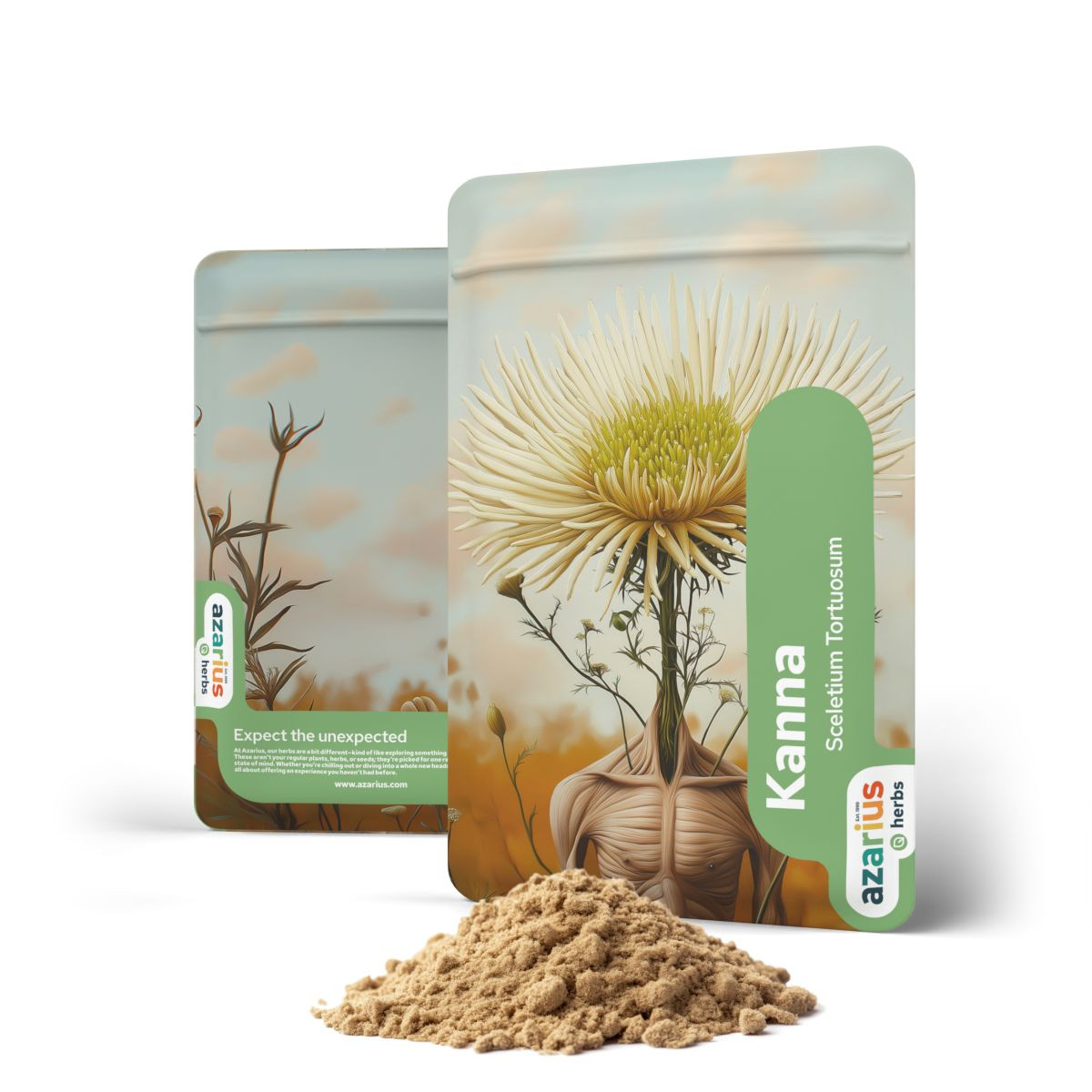
Kanna extract
ET2 Extract (1g)If you’re new, gentler approaches like tea, capsules, or low-dose powder are often the easiest place to begin. Paying attention to how your body responds and avoiding unnecessary combinations helps reduce unwanted effects.
References
- Olatunji TL, Siebert F, Adetunji AE, et al. Sceletium tortuosum: A review on its phytochemistry, pharmacokinetics, biological and clinical activities. Journal of Ethnopharmacology. 2021;280:114476. doi:https://doi.org/10.1016/j.jep.2021.114476 ↩︎
- SCELETIUM TORTUOSUM HERBA Definition. https://pza.sanbi.org/sites/default/files/info_library/scelettort.pdf ↩︎
- Terburg D, Syal S, Rosenberger LA, et al. Acute Effects of Sceletium tortuosum (Zembrin), a Dual 5-HT Reuptake and PDE4 Inhibitor, in the Human Amygdala and its Connection to the Hypothalamus. Neuropsychopharmacology. 2013;38(13):2708-2716. doi:https://doi.org/10.1038/npp.2013.183 ↩︎
- Nell H, Siebert M, Chellan P, Gericke N. A Randomized, Double-Blind, Parallel-Group, Placebo-Controlled Trial of Extract Sceletium tortuosum (Zembrin) in Healthy Adults. The Journal of Alternative and Complementary Medicine. 2013;19(11):898-904. doi:https://doi.org/10.1089/acm.2012.0185 ↩︎
- Coetzee DD, López V, Smith C. High-mesembrine Sceletium extract (TrimesemineTM) is a monoamine releasing agent, rather than only a selective serotonin reuptake inhibitor. Journal of Ethnopharmacology. 2016;177:111-116. doi:https://doi.org/10.1016/j.jep.2015.11.034 ↩︎
- NICE. Selective Serotonin Reuptake Inhibitors (SSRIs). NICE. Published 2023. https://cks.nice.org.uk/topics/depression/prescribing-information/ssris/ ↩︎
- Isbister G. Serotonin syndrome - Symptoms, diagnosis and treatment | BMJ Best Practice. bestpractice.bmj.com. Published October 7, 2022. https://bestpractice.bmj.com/topics/en-gb/991 ↩︎