


.png)


How to use damiana
Key takeaways
- Damiana (Turnera diffusa) has been cherished for centuries in traditional remedies, especially known for supporting mood and sexual wellbeing.
- We can enjoy Damiana as a herbal tea, tincture, capsule, or even by smoking the dried leaves; the way we prepare it and its quality make a real difference to the effects.
- It’s always best to start with a low dose, gradually increasing while we pay attention to how our bodies respond.
- Taking Damiana daily, at a consistent time, helps us get the most from its natural benefits—listening to our bodies along the way.
- As with any herbal supplement, we should speak to a healthcare professional before using Damiana alongside medications or if we’re feeling unwell.
- Always choose reputable suppliers who offer certified and high-quality Damiana products for safety and best results.
We usually use Damiana by making a soothing herbal tea or gently smoking the dried leaves, but tinctures and capsules are also popular for those who prefer a simple and reliable method. The leaves of Damiana are valued for their calming and uplifting features, making them a popular natural remedy for easing stress and encouraging relaxation. Enjoying Damiana tea is straightforward—just steep the dried leaves in hot water. Smoking provides fast-acting effects, while capsules and tinctures suit those looking for steady support and consistent dosing. There’s a rich tradition of blending Damiana with other botanicals too. Ultimately, it’s about finding what fits best with our routines and preferences. Up next, we’ll explore each method in more detail and clarify what we can expect from each one.
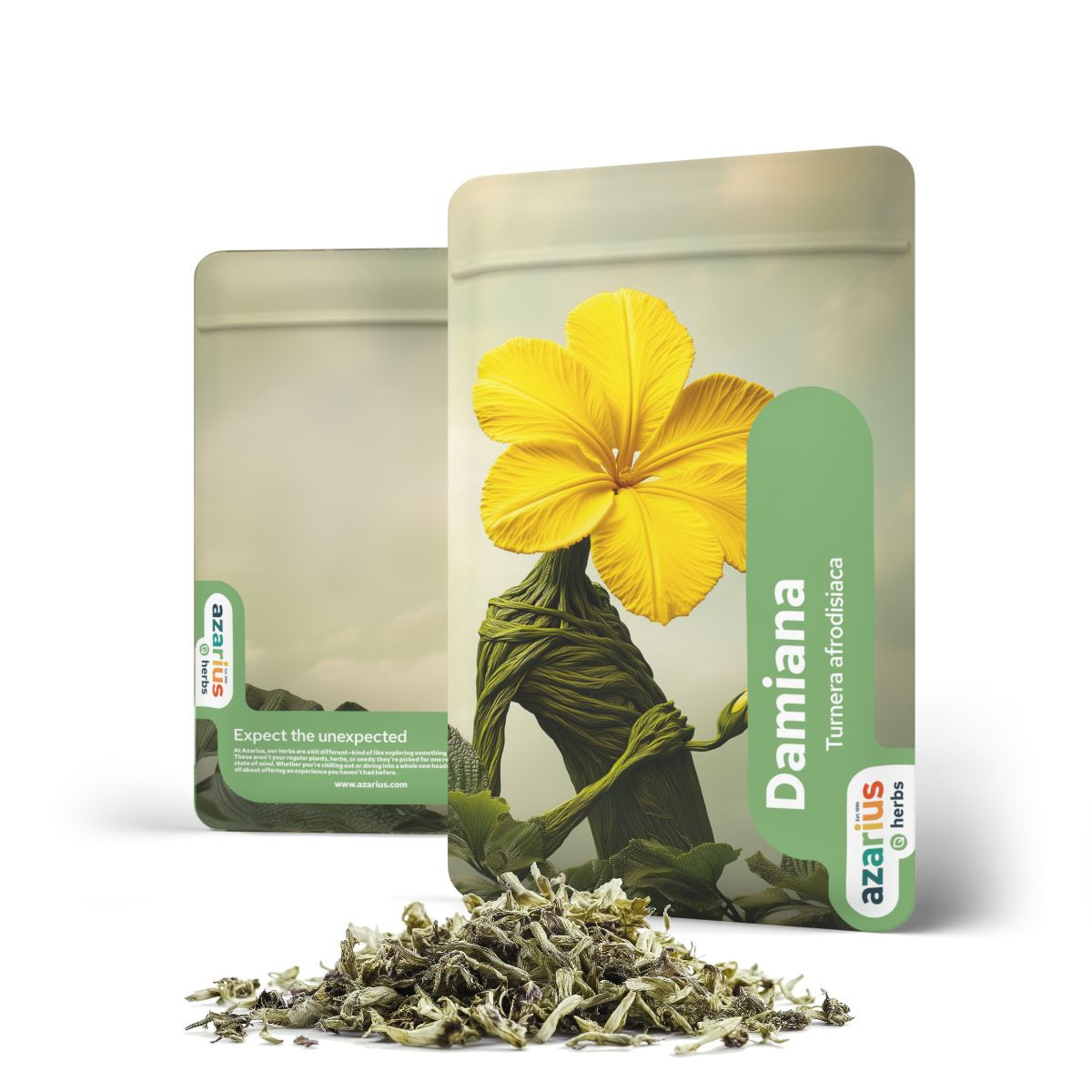
Damiana Leaves
Dried leaves (80g)What is damiana?
Damiana is a wild shrub native to Mexico, Central America, and the West Indies, easily recognised by its aromatic yellow flowers. Over the centuries, damiana (Turnera diffusa) has become well known in traditional herbal remedies for both its distinctive scent and its reputed health benefits. We value damiana for its time-honoured role as a herbal aphrodisiac, as well as a natural digestive aid and mood enhancer. Here is a snapshot of its origins and significance:
| Scientific name | Native regions | Historical significance |
|---|---|---|
| Turnera diffusa | Mexico, Central America, West Indies | Long used in Mexican folk medicine, rituals, and as a soothing nerve tonic |
Traditional roots
Within the world of native herbal medicine, damiana stands out for its reputation as a natural aphrodisiac. For centuries, traditional healers in Mexico and Central America prepared damiana tea and tinctures, convinced of its ability to support libido and fertility. It wasn’t just considered a physical remedy—damiana often played a part in spiritual practices, symbolising peace and emotional balance.
Spanish missionaries soon integrated damiana into their herbal traditions, harnessing it for stress, mild depression, menstrual discomfort, and general wellbeing. Many of us continue to rely on damiana today, seeking gentle relief from stress and looking to boost our mood naturally.
Key compounds
Damiana’s benefits are believed to arise from its rich mix of natural compounds. Most notable are the flavonoids and glycosides, which offer antioxidant support and are thought to contribute to its calming effects. The plant’s volatile oils not only provide its distinctive aroma but may also enhance its overall therapeutic impact.
While research into damiana is still limited, many believe these compounds play a role in lifting mood and supporting sexual function. Its antioxidant properties are also valued by those of us seeking to support our wellbeing naturally.
Damiana today
Nowadays, damiana can be found in many health shops as a herbal supplement, calming tea, or in blends designed to support sexual health and relaxation. Some of us reach for damiana to ease digestion or provide gentle relief from menstrual symptoms, while others use it as a subtle mood booster.
Interest in damiana as part of holistic wellness continues to grow. Although most of its benefits are backed by tradition and anecdotal evidence rather than science, its unique blend of soothing and stimulating properties ensures its enduring popularity among those of us seeking a gentle herbal ally.

How long do Damiana’s effects last?
Damiana effects last 1–6 hours; longer when taken as tea. Store in cool, dry place for potency. Popular for relaxing, mood-lifting benefits.How can we take damiana?
Damiana is available in several convenient options, each with its own set of benefits and best uses. It’s important to choose products from trusted sources to ensure both quality and safety. Since every one of us responds differently, we encourage you to experiment a bit to find what suits your needs. Please remember, if you’re managing any health conditions or are on medication, always have a chat with your healthcare provider first for individual advice.
- Dried leaves (for tea or smoking)
- Powdered extract
- Alcohol-based tinctures
- Capsules or tablets
- Herbal smoking blends
1. Brewing damiana tea
For tea, we use half a teaspoon of dried damiana leaves per cup. Steep the leaves in hot water (aim for around 90°C, not boiling) and let them infuse for 10 to 15 minutes.
Some of us enjoy combining damiana with chamomile or spearmint. Not only does it mellow the robust flavour, but it also creates a softer, more pleasant taste. You can enjoy damiana tea once daily, or up to three times if you feel comfortable with it. Many find it helps them relax in the evening or after a busy day. Damiana tea is often used for gentle relaxation and to help ease anxious feelings.
2. Using damiana tincture
We prepare tinctures by soaking damiana leaves in strong alcohol for several weeks before straining. Tinctures are quick to use and easy to control the dose. You can place a few drops under your tongue or add them to your drinks.
Their ease of use fits in well with our busy lives. Tinctures provide rapid support for mood and relaxation – perfect for those seeking a simple alternative to tea. This method is especially handy if you’re on the go or want to avoid brewing.
3. Taking damiana capsules
Capsules are straightforward and deliver a consistent dose—usually between 400 and 800 mg per day, split into two servings. Making capsules at home means you know exactly what you’re taking and allows control over the strength.
Capsules are ideal for those of us who aren’t fond of damiana’s earthy taste. As always, stick to established brands and double-check the label for quality assurances.
4. Smoking damiana
Some of us choose to smoke damiana alone or mixed with other calming herbs. In certain regions, this is a popular alternative where other options are limited.
Speaking personally, we prefer methods like tea, tincture, or capsules, as smoking carries its own health risks, especially for your lungs. However, we recognise that smoking damiana also holds a place in various cultural traditions, so the choice is ultimately personal.
Finding your ideal dosage
Working out the right damiana dosage for us means taking things slowly, tuning in to our body, and practising a bit of patience. There’s no single answer that works for everyone, so it’s all about discovering what feels right for each of us. Here’s a step-by-step guide to help us get started, tweak things to suit our needs, and keep track of our progress.
Begin with a low dose
We should always begin with the lowest effective amount—think 1 to 2 grams of dried damiana leaf (roughly one teaspoon) at a time, or around 50–100 mg if it’s a concentrated resin. If we’re using a liquid extract, no more than 1 ml (or 20 drops) per day is a sensible place to start. Although some research has trialled higher doses (up to 1,600 mg two or three times daily), there’s no rush—we’re better off taking it slow.
Let’s keep a basic diary of what we take, when we take it, and how we feel afterwards. A week or two of jotting down our experiences helps us spot patterns and be confident about any changes we consider making down the line.
Our bodies may take a few days to show the benefits, so patience is key. Taking too much, too soon, is more likely to cause discomfort.
Checking in with ourselves
After each dose, let’s check in: notice any shifts in our mood, energy, relaxation, or sex drive. Changes in how we feel emotionally are just as important as the physical effects.
Only think about increasing our dose when we’re sure about its effects. If, after a week, we’re not noticing much, it’s fine to try a small increase. But if we ever feel restless, heavy, or out of sorts, it’s best to cut back—particularly on things like caffeine.
Damiana often impacts mood and libido: some of us will notice these changes, others may not. Tracking these effects gives us clues to our personal sweet spot.
If we experience anything worrying—such as digestive troubles or headaches—it’s important to stop and check in with a healthcare professional.
When to take it
Many of us choose damiana when we’re looking for relaxation or deeper connection, such as before an intimate moment. For others, it’s best enjoyed with a light meal, rather than on an empty stomach.
We should try to avoid taking it late at night, as some people find it makes them more alert or gives them vivid dreams.
Consistency matters—taking our dose at the same time each day helps our body adapt and makes it easier to notice any changes.
Chat with an expert
Anyone with a health condition or using medication should check with their doctor first.
There’s no perfect, one-size-fits-all dose—further research will hopefully narrow it down, but until then, our safety is most important.
It’s always okay to seek advice if we’re unsure.

Damiana
Explore damiana's benefits with our high-quality supplements and extracts. Shop damiana leaf now at Azarius for fast delivery and excellent customer service!Safety and interactions
As responsible damiana users, it's important that we keep potential risks in mind and know how it may interact with other substances. Prioritising safe usage supports our personal growth and wellbeing.
Potential side effects
- Mild stomach discomfort or nausea
- Feeling drowsy or a little dizzy
- Shifts in mood or alertness
- Difficulties sleeping or mild headaches (often if too much is taken)
- Rare: seizures at extremely high doses
Taking large amounts of damiana raises the chances of side effects like sleeplessness and headaches. Keeping to moderate amounts lowers these risks. Let’s be attentive if anything feels unusual when we start using damiana. Should we experience strong or unexpected effects, it’s best to stop right away and check in with a healthcare professional.
Medication warnings
Damiana can impact the way some medications work, including certain antidepressants. It’s known to interact adversely with other blood sugar-lowering herbs, such as fenugreek and chromium. If we’re using medicine for diabetes, damiana might cause our blood glucose to fall too low. Always update your healthcare provider before starting damiana, especially if you’re taking any daily medication. Clear, open communication helps us identify and avoid potential problems sooner.
| Medication type | Possible interaction | What we should do |
|---|---|---|
| Diabetes meds | Might lower blood sugar | Check blood sugar closely |
| Antidepressants | Mild effect possible | Speak to your provider |
| Herbal sugar aids | Risk of excessive lowering | Avoid combining |
| Surgery meds | Could affect post-op | Stop 2 weeks before operations |
Who should avoid damiana
Pregnant or breastfeeding individuals should avoid damiana, as there simply isn’t enough evidence about safety. If we have hormone-sensitive conditions, such as certain cancers, it’s wise to be cautious. Anyone with ongoing or special health needs should consult their provider first, just to be sure. This personalised approach keeps our health safeguarded.
Why quality matters
Choosing quality damiana matters for both safety and effectiveness. We should look for pure, organic options from trustworthy sources who provide clear, honest labelling. How it’s sourced is important—reliable suppliers carefully test for unwanted substances and make the herb’s origin clear. Before we buy, it helps to check reviews or make sure a product is certified organic.
Conclusion
We like to keep things straightforward when it comes to damiana. You can steep it for a gentle boost, smoke it for a more immediate effect, or choose capsules if you’d prefer to avoid the taste altogether. We always suggest starting with a small amount and paying attention to how your body reacts.
Many people turn to damiana to alleviate stress or lift their spirits, though everyone is unique and results will differ. It’s important to take note of any potential side effects, especially if you’re on medication—consult your healthcare provider if you’re unsure.
Damiana has been tried and tested by many across the world for years, so rest assured you’re in good company as you explore what it has to offer. Interested in giving damiana a try? Pick the method that fits best with your lifestyle and proceed with caution. Stay curious, look after yourself, and be sure to share your experience with others.
Frequently asked questions
What are the main uses of damiana?
Damiana is best known for supporting mood balance, promoting relaxation and enhancing sexual wellbeing. Many people use it as a mild herbal supplement. However, scientific research on these benefits is still at an early stage.
How do we take damiana?
We can enjoy damiana in a range of ways, such as herbal teas, capsules, tinctures or simply as dried leaves. Always follow the directions provided with your chosen product or ask your GP for guidance.
What is a typical daily dose of damiana?
For most adults, the standard amount is 2–4g of dried leaf per day if making tea. If we're using supplements like capsules or tinctures, we should stick to the manufacturer's recommended dose or seek advice from a healthcare professional.
Is it safe for us to use damiana?
For the majority of adults, moderate use of damiana is generally considered safe. Some of us may experience mild stomach discomfort. There's not enough evidence to say it’s safe for those who are pregnant or breastfeeding.
Can damiana interact with medication?
Yes, damiana may interact with diabetes medication or other prescriptions. We should always consult our GP before adding damiana to our routine, especially if we’re taking any prescribed medicines.
How soon does damiana take effect?
We all react differently—some of us might notice benefits within a few hours, while others find it takes several days of regular use. How quickly it works depends on the form and amount we use.
Is it okay for us to take damiana every day?
Lots of people use damiana daily at the suggested amounts. Still, the long-term safety hasn't been thoroughly studied. It’s sensible to take breaks and seek advice from a healthcare provider if we have any concerns.
Related posts
Can you become dependent on kratom?
Is kratom addictive? This evidence-based guide examines what research says about kratom’s addiction potential, brain...
Read more
Kratom Dosage: What You Need to Know
Wondering how much kratom you should take? This guide explains safe kratom dosage by weight, tolerance, and strain....
Read more
A Beginner's Guide to Kratom Strains
Curious about red, green, or white kratom? This beginner’s guide explains what kratom strains are, how colour and...
Read more
What Are the Effects of Kratom on the Body?
Kratom affects the body in complex ways, influencing mood, energy, and pain perception. This article explores how...
Read more
How to Prepare and Use Kratom
Curious about kratom? This guide explains safe and effective ways to prepare and use kratom, from teas and capsules...
Read more
Kratom: Potential risks and side effects
Kratom is often seen as a natural remedy, but how safe is it? This guide explores the latest research on kratom side...
Read more
What Are the Side Effects of Damiana?
A clear guide to damiana risks for wellness, sexual health, or mood support. Learn what to watch for, who should...
Read more
How to use khat
Learn how khat chewing is practised in East African and Arabian communities, from preparing fresh leaves to session...
Read more
What Is Blue Lotus and What Are Its Main Uses?
A grounded guide to the blue lotus flower (Nymphaea caerulea): its history, how people use it today, what to expect...
Read more
Blue lotus side effects
Learn what we do (and don’t) know about blue lotus drug interactions, dosing, and how to reduce avoidable risks. Keep...
Read more
Is Hawaiian baby woodrose safe to use?
Guide to Hawaiian Baby Woodrose seeds: effects, safety tips, side effects, and legal status for safe, informed use.
Read more
What Is Kratom and Where Does It Come From?
Kratom (Mitragyna speciosa) is a tropical tree native to Southeast Asia. Long valued in traditional communities, it’s...
Read more
What Is Kanna and What Are Its Traditional Uses?
Kanna, also known as Sceletium tortuosum, has been used for centuries by the Khoikhoi and San peoples for relaxation,...
Read more
How Does Kanna Work in the Body? Effects on Mood and Stress
Explore how kanna (Sceletium tortuosum) works in the body, focusing on its alkaloids such as mesembrine, serotonin...
Read more
How to Take Kanna: Powder, Capsules, Tea & More Explained
Curious about how to take kanna? This beginner-friendly guide explores common kanna consumption methods, including...
Read more
Buying Kanna Supplements: What to Look For
Curious about buying kanna supplements but unsure what really matters? This guide explains extract types, dosage...
Read more
Are There Side Effects or Risks Associated With Kanna?
Kanna is known for its gentle mood-enhancing effects, but like any active plant, it has potential side effects and...
Read more
How to Choose the Best Damiana Supplement
Not all damiana products are made alike. This guide breaks down labels, extracts, tinctures vs capsules, and quality...
Read more
What is Khat and Where Does it Originate From?
A straightforward guide to khat: its botanical background, where it comes from, the cultural history of khat chewing,...
Read more
What Is Hawaiian Baby Woodrose and What Are Its Common Uses?
Curious about Hawaiian baby woodrose seeds? This guide separates plant ID from internet lore, with a harm-aware look...
Read more
How Is Blue Lotus Traditionally Prepared or Consumed?
Curious about blue lotus' traditional uses? Explore how scent, ceremony, and shared drinking shaped infusions, wine...
Read more
What Is Passionflower Traditionally Used For? History, Herbal Uses, and How It’s Taken
From hedgerow vine to apothecary staple: see how different cultures used passionflower medicinally, and why...
Read more
Are There Any Side Effects of Taking Passionflower? What You Should Know Before Using It
Thinking of adding it to your wind-down routine? This guide breaks down passionflower tea side effects, dosing...
Read more
What Are Ephedra Seeds and Why Do People Use Them?
Curious about Ephedra vs ephedrine? This guide breaks down seeds, stems, and extracts, along with the real-world...
Read more
Ephedra Seeds Side Effects: What You Should Know
Thinking of trying ephedra? This guide breaks down ephedra health risks, how dose and product strength affect...
Read more
African Dream Seeds Explained: Origins, Meaning, and Traditional Uses
Curious how a drifting “sea bean” became a ritual object? Explore African dream bean history, cultural symbolism, and...
Read more