


.png)


Kanna, or Sceletium tortuosum, is a succulent traditionally chewed in South Africa for its steadying and mood-modulating qualities. Contemporary research helps explain why, pointing to a set of alkaloids that influence serotonin signalling and stress circuits in the brain.1
Kanna is not considered psychedelic at typical smartshop doses. Most people describe subtle shifts in ease, sociability, and body tension rather than altered perception. Many users explore kanna for its subtle mood-support benefits, although responses vary and evidence remains limited.2
What Are the Main Active Compounds in Kanna?
Kanna contains two main alkaloid families: mesembrine-type and joubertiamine-type molecules. Mesembrine, mesembrenone, and mesembrenol are the most studied and are thought to drive many of the plant’s psychoactive properties.
These alkaloids influence serotonin signalling by inhibiting the serotonin transporter, which slows reuptake. Some extracts also show PDE4 inhibition, which affects cAMP signalling linked to stress and emotional regulation.
Effects vary across plant material and extracts. Typical smartshop doses tend to produce a grounded, functional profile rather than dramatic changes in perception.
So, does kanna have psychedelic effects? Most evidence indicates no at standard doses. Effects are typically described as mood-modulating and gently relaxing, without being hallucinogenic.
Mesembrine, Mesembrenone and Other Alkaloids
Mesembrine appears to be the most potent SERT-active alkaloid, gently slowing serotonin reuptake and allowing signalling to persist a little longer. Mesembrenone and related compounds add complementary activity, including PDE4 inhibition.
In a human fMRI study, a 25 mg extract reduced amygdala reactivity and altered its connectivity with the hypothalamus, suggesting an influence on stress and threat-processing circuits.4
Together, these alkaloids create kanna’s characteristic profile: clear-headed, subtly relaxing, and socially softening when used thoughtfully.
How Does Kanna Interact With the Brain?
After oral, sublingual, or inhaled use, kanna alkaloids enter the bloodstream and cross into the brain. They interact with SERT, PDE4, and potentially other receptors linked to stress and motivation.
The interaction with SERT slows serotonin clearance, which may contribute to a mellow, socially open tone. PDE4 inhibition raises intracellular cAMP levels, influencing stress responses and attention.
Imaging studies show that kanna can alter amygdala activity, reducing reactivity to threat. A 2023 review, however, found no consistent clinical evidence for reduced anxiety compared with placebo.5
Serotonin Reuptake Inhibition
Serotonin acts as a messenger between neurons. Normally, a transporter removes it quickly, switching the signal off.
Kanna alkaloids interfere gently with this transporter. By slowing the reuptake of serotonin, it remains active in the synapse for a slightly longer period. The mechanism resembles some principles behind SSRIs, but kanna is milder, variable in potency, and should not be used as a substitute for prescription medication. This process is often described in research as the serotonin reuptake inhibition of Sceletium tortuosum.3
Dopamine Pathways and Stress Circuits
Some alkaloids may also interact modestly with dopamine-related systems. This may contribute to kanna’s functional, rather than sedating or stimulating, character.
fMRI work suggests kanna can reduce amygdala reactivity, which may help explain user reports of feeling less tense or less caught in worry loops. Evidence for the reduction of clinical anxiety remains mixed.4
What Happens to the Body After Taking Kanna?
“How does kanna work in the body?” is a common question, and the answer involves how its alkaloids move through the bloodstream and interact with receptors once absorbed.
Once absorbed, kanna alkaloids are distributed throughout the body, metabolised in the liver, and excreted. Human pharmacokinetic data remain limited.
Some people notice reduced muscle tension, mild body warmth, or a subtle shift in mood. Controlled studies and toxicological assessments show that standardised extracts have generally been well-tolerated.6
Onset and intensity vary across formats such as chewed leaf, extracts, capsules, or vaporised material.
Kanna effects: onset, duration and what people typically notice
Many readers looking into kanna are not only interested in how it works, but what the effects feel like in real life, how quickly they start, and how long they tend to last. The challenge is that kanna products vary widely in alkaloid profile and strength, and individual sensitivity differs.
With that in mind, the timelines below are best understood as general ranges, not guarantees.
Onset and duration by format
| Format | Onset (approx.) | Peak (approx.) | Duration (approx.) |
|---|---|---|---|
| Sublingual extract | 10 to 30 minutes | 30 to 90 minutes | 2 to 4 hours |
| Oral (capsules, swallowed extract) | 30 to 90 minutes | 1 to 3 hours | 4 to 6 hours |
| Chewed plant material | 15 to 45 minutes | 45 to 120 minutes | 3 to 5 hours |
| Inhaled or vaporised | 1 to 5 minutes | 10 to 30 minutes | 30 to 90 minutes |
Food intake, stress, sleep, caffeine, and product consistency can all shift this timing. If someone is trying to understand their response, using the same format and keeping notes tends to be more informative than changing multiple variables at once.
Commonly reported kanna effects
At typical smartshop doses, kanna is generally described as clear-headed and functional rather than intoxicating. People often report subtle shifts in emotional tone and body tension, not dramatic changes in perception.
- Emotional tone: a calmer baseline, less stress reactivity, or a mild mood lift
- Social feel: slightly easier conversation or more comfort in social settings
- Body effects: reduced muscle tension, mild warmth, or a “softer” physical stress response
- Focus: occasionally a smoother attention flow, although this varies by person and extract
Possible side effects and when to be cautious
Side effects are usually mild when they occur, but they do happen, especially with stronger extracts or if someone is sensitive to serotonergic compounds.
- nausea or stomach discomfort, more common with oral use
- headache or light dizziness
- restlessness or feeling slightly overstimulated
- sleep disruption if taken late in the day
How Kanna Compares to Other Mood Enhancers
Kanna tends to sit between nootropics and classical psychedelics: perceptible but generally subtle. Its dual activity on SERT and PDE4 makes its profile more emotional than purely cognitive.
Comparisons with SSRIs are common because both influence serotonin, but their contexts differ. SSRIs are regulated medicines with defined dosing, monitoring, and risk profiles; kanna is a traditional botanical with variable potency and far less evidence.
Kanna vs SSRIs (Overview)
The following overview outlines the primary differences between kanna and SSRIs. It is not a medical comparison, but a simple way to understand how a traditional botanical and a regulated prescription medicine differ in terms of use, evidence, and safety considerations.
| Feature | Kanna | SSRIs |
|---|---|---|
| Regulatory status | Botanical or supplement | Prescription-only |
| Mechanism | SERT inhibition + possible PDE4 inhibition | Primarily SERT inhibition |
| Evidence base | Limited human trials; mixed findings | Extensive clinical research |
| Potency and consistency | Variable between extracts | Standardised and regulated |
| Use pattern | Occasional or short-term | Daily, medically supervised |
| Interactions | Avoid serotonergic medications | Managed under clinician care |
Do not start, stop, or change prescription medication based on supplement use.
Safety, Interactions and Considerations
Kanna appears to be generally well-tolerated at typical smartshop doses, although the evidence is limited. Because kanna influences serotonin, there is a real risk of interaction with serotonergic medications. Kanna safety interactions mainly concern substances that influence serotonin, which can increase the risk of unwanted effects when combined.6
Avoid combining kanna with:
- SSRIs, SNRIs, MAOIs
- Triptans and other serotonergic agents
- Supplements known to influence serotonin pathways
Alcohol may increase dizziness or sedation; test kanna alone before combining. People who are pregnant, breastfeeding, or managing cardiovascular issues, seizure conditions, or psychiatric disorders should seek medical guidance before use.
Reverse Tolerance
Some users report feeling clearer after repeated sessions at the same dose. This remains anecdotal. Controlled studies have not confirmed a mechanism. Regardless, it is sensible to proceed slowly, incorporate rest days, and avoid rapidly escalating doses.
Should You Try Kanna?
Kanna may appeal to those curious about subtle, natural mood support that affects serotonin and stress circuits without producing psychedelic effects. It is less suitable for those seeking dramatic shifts or anyone taking serotonergic medication.
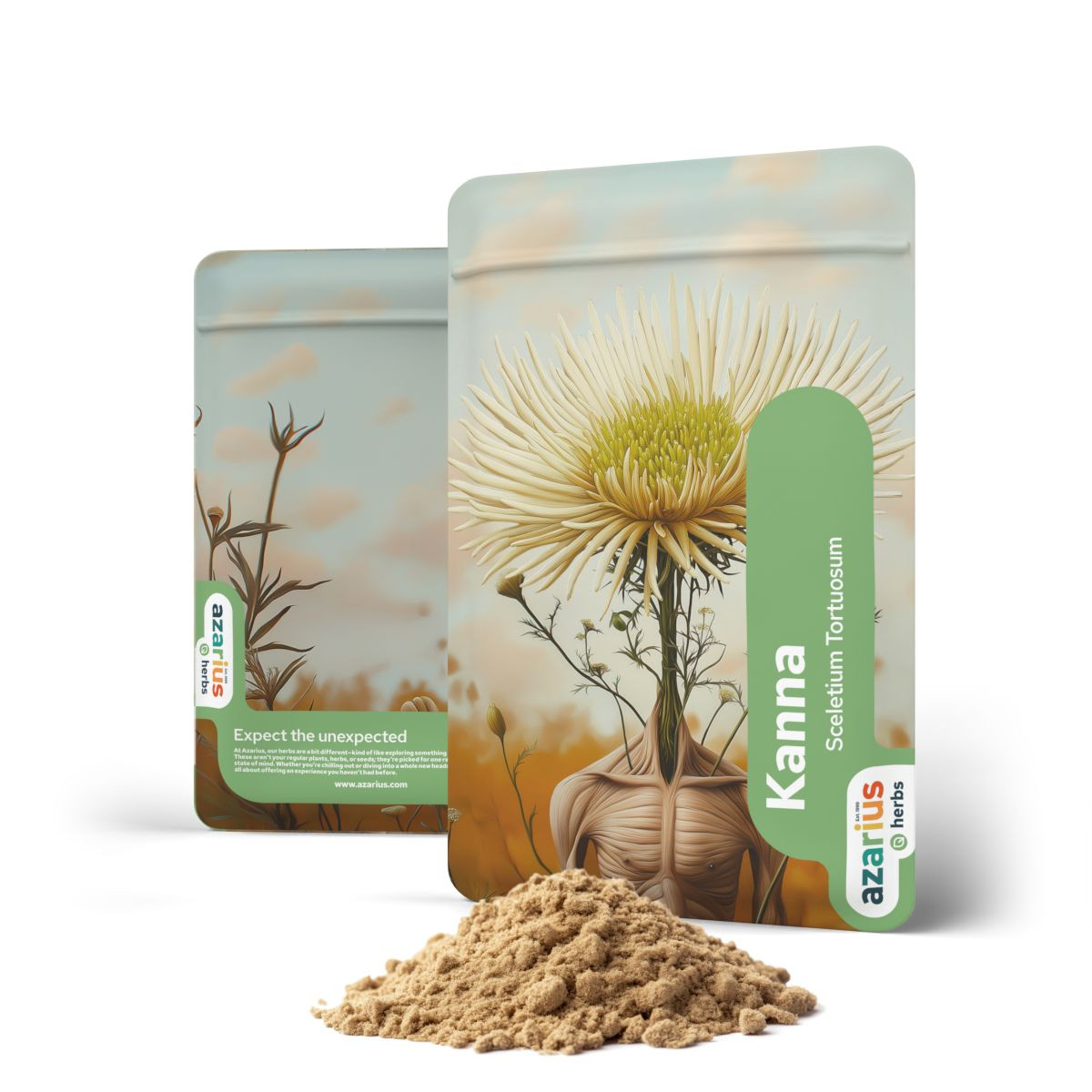
Kanna extract
ET2 Extract (1g)If exploring it, begin with a low dose, choose a calm environment, and monitor how your body responds. For more information on side effects and dosing, please refer to our comprehensive educational resources.
References
- Smith MT, Crouch NR, Gericke N, Hirst M. Psychoactive constituents of Sceletium tortuosum. J Ethnopharmacol. 1996;50(3):119-130. doi:https://doi.org/10.1016/0378-8741(96)01382-0 ↩︎
- National Center for Biotechnology Information. Sceletium tortuosum. PubChem Compound Summary. Accessed 2025. https://pubchem.ncbi.nlm.nih.gov ↩︎
- Harvey AL, Young LC, Viljoen AM, Gericke N. Pharmacological actions of the South African medicinal and functional food plant Sceletium tortuosum and its principal alkaloids. J Ethnopharmacol. 2011;137(3):1124-1129. doi:https://doi.org/10.1016/j.jep.2011.07.035 ↩︎
- Terburg D, Syal S, Rosenberger LA, et al. Acute effects of Sceletium tortuosum extract on amygdala reactivity in humans: A randomized placebo-controlled fMRI study. J Psychopharmacol. 2013;27(9):867-876. doi:https://doi.org/10.1177/0269881113490326 ↩︎
- Lopresti AL. A systematic review of Sceletium tortuosum for mood, anxiety, and stress. J Altern Complement Med. 2023;29(1):12-22. doi:https://doi.org/10.1089/acm.2022.0317 ↩︎
- European Medicines Agency. Assessment of traditional herbal substances: Sceletium tortuosum. EMA Herbal Monograph. Published 2021. https://www.ema.europa.eu ↩︎