


.png)


Magic truffles have become one of the most approachable entry points into psychedelic experiences. They share the same active compound as traditional magic mushrooms, yet many people find their effects smoother and more gradual. Whether you’re curious about exploring consciousness or simply want an informed understanding of how magic truffle effects unfold, knowing what to expect helps the journey feel grounded, intentional, and safer.
Magic truffles originate from the same fungal species as magic mushrooms, but they develop underground as sclerotia, dense, compact food reserves that store psilocybin.1 If you want a deeper primer on their biology and how they differ from mushrooms, see what magic truffles are and how they form. Because of their slower digestion and the structure of sclerotia, many people describe a gentler rise toward the psychedelic experience.
Once ingested, psilocybin is converted into psilocin, a compound that acts primarily on 5-HT2A receptors in the brain’s serotonin system, temporarily shifting perception, emotional responsiveness, and network-level connectivity.2 3
So what do those shifts actually feel like? How does the body respond? And how long do magic truffle effects last? Let’s look at the experience step by step.
Do Magic Truffles Affect Everyone in the Same Way?
The effects of magic truffles vary considerably from person to person. While they contain the same psychoactive molecules as mushrooms, several factors influence how someone experiences them: mindset, emotional state, sleep, hydration, metabolism, and, most importantly, the environment in which they’re taken.
- This concept of “set and setting” is a foundational principle of modern psychedelic research and appears consistently in safety guidelines for human studies.4
- Individual biology also matters. People with a faster metabolism may notice the early effects sooner, while those with a higher body mass may require slightly more to achieve comparable intensity.
- Diet plays a role, too. Truffles taken on an empty stomach often produce a quicker come-up, whereas a heavy meal can delay and soften the initial effects.
User reports sometimes note subtle differences between magic truffles vs. magic mushrooms effects. Because truffles digest more slowly, the onset may feel more gradual, though scientific evidence comparing the two directly remains limited. What is clear is that individual variability makes each person’s experience distinct.
What Are the Main Physical and Psychological Effects of Consuming Magic Truffles?
Although every journey is personal, both neuroscience and thousands of user accounts reveal consistent patterns. Physical sensations tend to appear first, followed by psychological effects as psilocin reaches peak concentration in the brain.
Physical Effects of Magic Truffles
When psilocybin begins to circulate, the first noticeable effects are often physical, although their intensity varies widely. Many people describe these sensations as the body adjusting to the altered serotonin signalling.
Body Load
A mild “body load” is commonly experienced. It may feel like a sense of heaviness, warmth, pressure, or, conversely, a feeling of lightness. Mild, transient nausea is often reported, likely because serotonin receptors in the gut respond to psilocin. Yawning, a frequent early symptom, is a serotonin-linked reflex rather than a sign of fatigue.
Sensory Sensitivity
As the experience deepens, sensory information often feels richer and more vivid. Colours may appear more saturated, sounds may be more textured, and surfaces may be more detailed. This sensory enhancement has been associated with changes in how brain regions (such as perception and emotion) communicate.5 Many describe this state as immersive and engaging without necessarily being overwhelming.
Appetite Changes
Appetite tends to decrease during the experience. Most people don’t feel hungry until the comedown, another effect linked to serotonin’s role in appetite signalling.
Psychological Effects of Magic Truffles
The psychological dimension is where magic truffles show their most distinctive qualities. Again, experiences vary, but several patterns consistently emerge in research and user accounts.
Mood Enhancement and Emotional Release
As psilocin interacts with serotonin receptors, the Default Mode Network (DMN) becomes less rigid, allowing many people to feel emotionally open, calm, or reflective.4 5 Some report laughter, tears, or cathartic release. In clinical settings, such emotional softening has been associated with temporary improvements in well-being following guided sessions.5
Altered Perception and Visual Changes
Visual effects can range from subtle shifts, like softening edges or warmer colours, to more pronounced patterns and imagery. These effects reflect changes in how brain networks communicate under the influence of psilocybin, particularly those involved in visual and associative processing.3 5 Even with eyes closed, many people see shifting shapes or colours, a hallmark of the psychedelic state.
Enhanced Introspection and Spiritual Experiences
For many, introspection is a central part of the experience. Thoughts may feel more profound or interconnected. Some report spiritual or mystical qualities, such as unity, insight into relationships, or a sense of meaning. While not universal, these effects contribute to the perception of magic truffle benefits among users.
How Quickly Do People Usually Feel the Effect After Taking Magic Truffles?
A key question for beginners is: How long does it take to feel the effects of magic truffles? Most people begin to notice initial changes within 30–60 minutes, although this varies depending on stomach contents, metabolism, and the dose.
Psilocin concentrations generally rise toward peak intensity within 90–180 minutes, reflecting established pharmacokinetic data from psilocybin studies.7
The come-up can be physically noticeable, such as warmth, light nausea, yawning, or a shifting of sensory focus, so a calm, supportive environment is crucial during this phase.
Onset Time
When taken on an empty stomach, effects may be noticeable within 20 to 40 minutes. With food, onset may be slower and gentler. Hydration, sleep, and individual sensitivity also play a role.
Peak Effects
During the peak, perception, mood, and cognition shift most strongly. Users often describe intensified introspection, richer visuals, and emotional depth. Time may feel slower or more fluid.
Comedown Phase
The comedown is usually gentle. Sensory intensity fades first, followed by emotional softening. Many people feel reflective, calm, or pleasantly fatigued, with subtle insights lingering into the next day.
| Timeframe | What Typically Happens |
|---|---|
| 00:00–00:30 | Early sensations begin: warmth, yawning, light body load |
| 00:30–01:30 | Noticeable sensory enhancement, colours intensify, mood lifts |
| 01:30–03:00 | Peak effects: visuals, emotional depth, introspection |
| 03:00–05:00 | Gradual comedown: visuals fade, calmness and clarity return |
| 05:00–08:00 | Afterglow: relaxation, reflection, mild tiredness |
Positive Benefits and Therapeutic Potential
Although magic truffles themselves are not used in clinical trials, their active compound, psilocybin, has been studied for its potential to influence mood, cognition, and emotional processing. Under controlled conditions, researchers have observed temporary increases in neural plasticity and reductions in depressive rumination or anxiety following guided therapeutic sessions.5 6
These outcomes should not be interpreted as treatment advice. Rather, they help explain why some people report feelings of clarity, emotional warmth, or a sense of perspective shift after a truffle experience.
Side Effects and Potential Risks
Magic truffles are generally well-tolerated, but risks vary by individual, context, and dose. Commonly described side effects include:
- Mild nausea or stomach discomfort
- Transient anxiety or confusion
- Heightened sensitivity to sensory input
- Occasional chills or fluctuations in body temperature
For a more detailed overview of common reactions and red flags, see magic truffles side effects and risks. People vary widely in how they respond to psilocybin, and some face higher risks than others. For example, individuals with a personal or family history of psychosis or bipolar disorder are usually excluded from clinical trials, as they may be more sensitive to potentially destabilising psychological effects.
If this applies to you, or if you’re taking medications like MAOIs or certain antipsychotics, it’s a good idea to speak with a qualified clinician before considering magic truffles.
How Long Do Psychedelic Truffles Stay in Your System?
Psilocin concentrations decline over several hours, and the compound is typically eliminated within approximately 24 hours, although this timeframe depends on individual metabolism and the specific testing methods used.7 Specialised laboratory tests can detect psilocin or its metabolites, but standard workplace drug panels do not routinely screen for psilocybin.
Final Tips for First-Timers
Below is a beginner-friendly checklist to help set the stage for a smoother experience:
- Choose a calm, comfortable environment
- Have a trusted sober sitter
- Set aside a full, obligation-free day
- Avoid mixing with alcohol or stimulants
- Eat lightly beforehand
- Stay hydrated
- Approach the experience with curiosity, not expectation
- Plan gentle integration afterwards (journaling, talking, resting)
For practical prep, timing, and ingestion methods, read how to take magic truffles safely. Magic truffles offer a uniquely approachable way to explore the psychedelic experience, blending gentle physical effects with meaningful shifts in perception and emotion. While everyone’s journey unfolds a little differently, understanding the key factors that shape these effects—dose, mindset, environment, and personal biology—helps create a safer and more intentional experience.
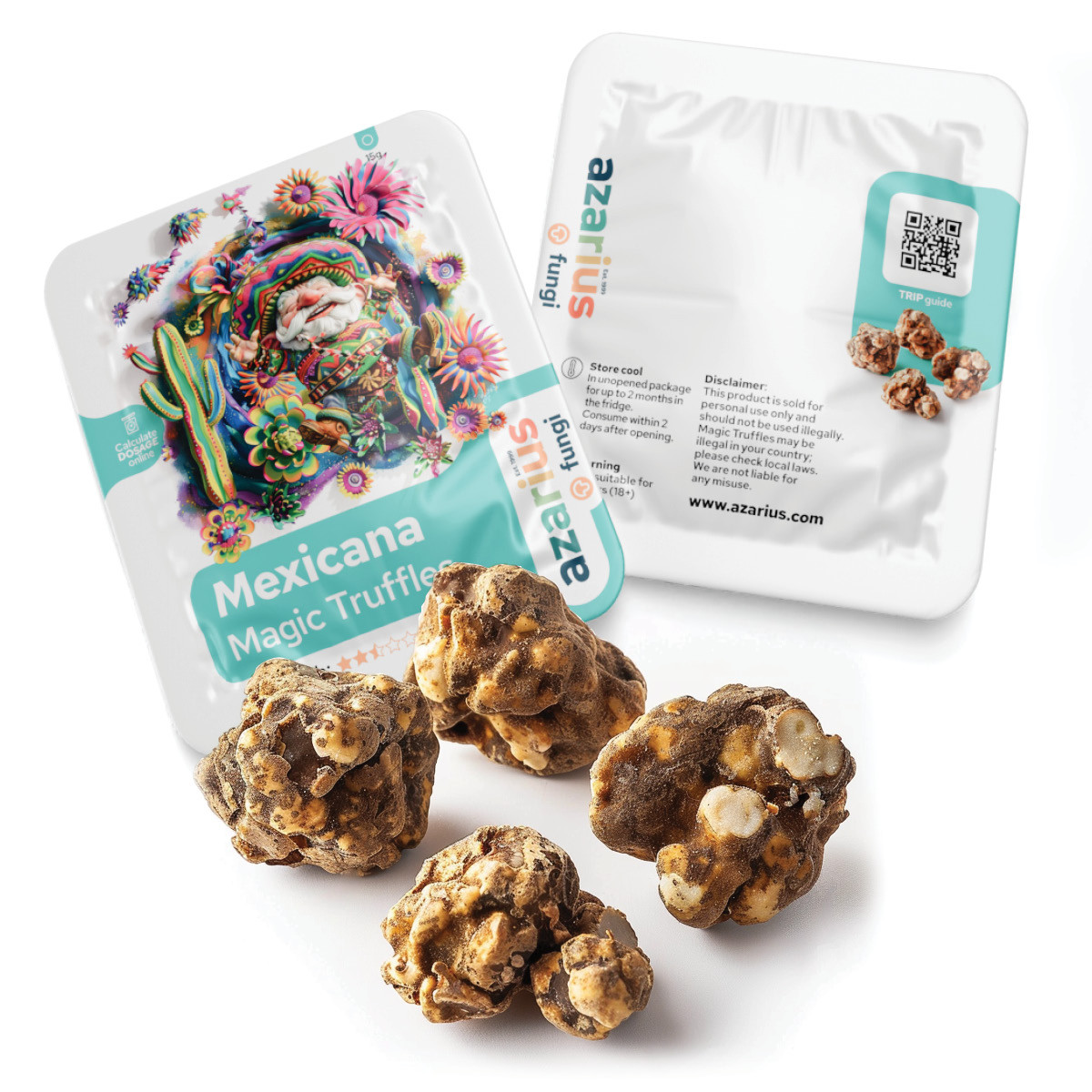
Mexicana
Azarius Magic Truffles (15g)References
- Passie T, Seifert J, Schneider U, Emrich HM. The pharmacology of psilocybin. Addiction Biology. 2002;7(4):357-364. doi:https://doi.org/10.1080/1355621021000005937 ↩︎
- Camilleri M. Serotonin in the gastrointestinal tract. Current opinion in endocrinology, diabetes, and obesity. 2009;16(1):53-59. doi:https://doi.org/10.1097/med.0b013e32831e9c8e ↩︎
- Carhart-Harris RL, Erritzoe D, Williams T, et al. Neural correlates of the psychedelic state as determined by fMRI studies with psilocybin. Proceedings of the National Academy of Sciences. 2012;109(6):2138-2143. doi:https://doi.org/10.1073/pnas.1119598109 ↩︎
- Johnson M, Richards W, Griffiths R. Human hallucinogen research: guidelines for safety. Journal of Psychopharmacology. 2008;22(6):603-620. doi:https://doi.org/10.1177/0269881108093587 ↩︎
- Griffiths RR, Johnson MW, Carducci MA, et al. Psilocybin produces substantial and sustained decreases in depression and anxiety in patients with life-threatening cancer: A randomized double-blind trial. Journal of Psychopharmacology. 2016;30(12):1181-1197. doi:https://doi.org/10.1177/0269881116675513 ↩︎
- Ly C, Greb AC, Cameron LP, et al. Psychedelics Promote Structural and Functional Neural Plasticity. Cell Reports. 2018;23(11):3170-3182. doi:https://doi.org/10.1016/j.celrep.2018.05.022 ↩︎
- Brown RT, Nicholas CR, Cozzi NV, et al. Pharmacokinetics of Escalating Doses of Oral Psilocybin in Healthy Adults. Clinical pharmacokinetics. 2017;56(12):1543-1554. doi:https://doi.org/10.1007/s40262-017-0540-6 ↩︎